How much does it cost to coat a garage floor?
A typical 2-car garage runs about $6–$10 per square foot installed — roughly $2,500–$4,000 — depending on the coating system, flake coverage and how much crack and moisture repair the slab needs. Every quote we give is free and in writing.
Polyaspartic or epoxy — which is better?
For most garages, polyaspartic. It installs in a single day, cures fast, resists UV so it won't yellow, and handles hot tires and road salt better than standard epoxy. Epoxy is a lower-cost base coat and still has its place — we'll tell you which system fits your floor and why.
How long does a floor coating take to install?
Most residential garage and basement floors are done in one day. You can usually walk on the floor the same evening and park on it in about 24–72 hours depending on the system and temperature.
Will it peel or lift like the kit I've seen fail?
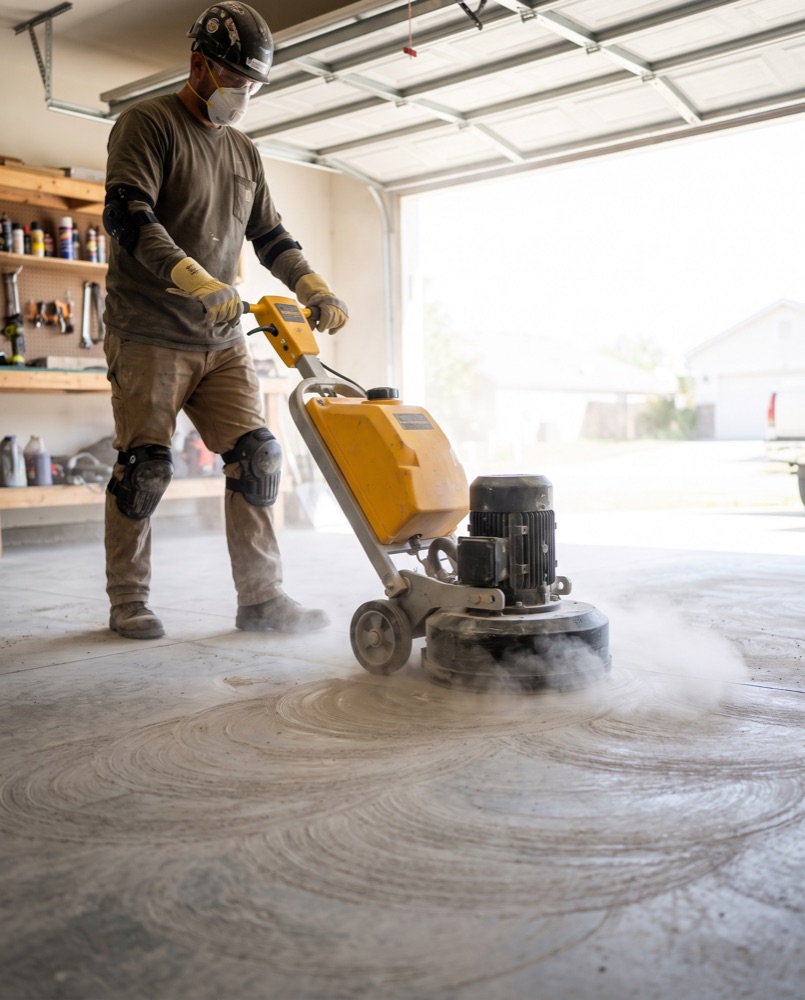
Not when it's prepped right. Peeling almost always comes from skipped prep — a floor rolled over dust, sealer or old paint, or one that was never moisture-tested. We diamond-grind to clean concrete and test the slab first, which is exactly why our floors stay down.
How long will a professional coating last?
A properly installed, diamond-ground polyaspartic flake floor commonly lasts 15–20+ years in a residential garage, and we back it with a lifetime warranty. Lifespan depends on the system and traffic — but it's measured in years, not the months you get from a DIY kit.
Do you coat basements, shops and commercial floors too?
Yes — garage floors are our most popular job, but we also coat basements and interior floors, commercial and warehouse floors, and install metallic and decorative finishes. Same prep-first process on all of them. Call (541) 981-6427 for a free quote.
Is epoxy flooring worth it for a garage?
For most homeowners, yes. A coated garage floor stops concrete dust, resists oil and chemical stains, cleans with a hose, and protects the slab from moisture and salt. It's one of the highest-return upgrades per dollar in the house, and a fresh flake floor is a real selling point when you list.
Can I put a coating over an old epoxy or painted floor?
Not directly — old coatings have to come off. We diamond-grind the existing paint or epoxy down to bare, profiled concrete, repair what's underneath, and install the new system on a clean slab. Coating over a failing coating just gives you two failing coatings.
What's the difference between flake, solid-color and metallic floors?
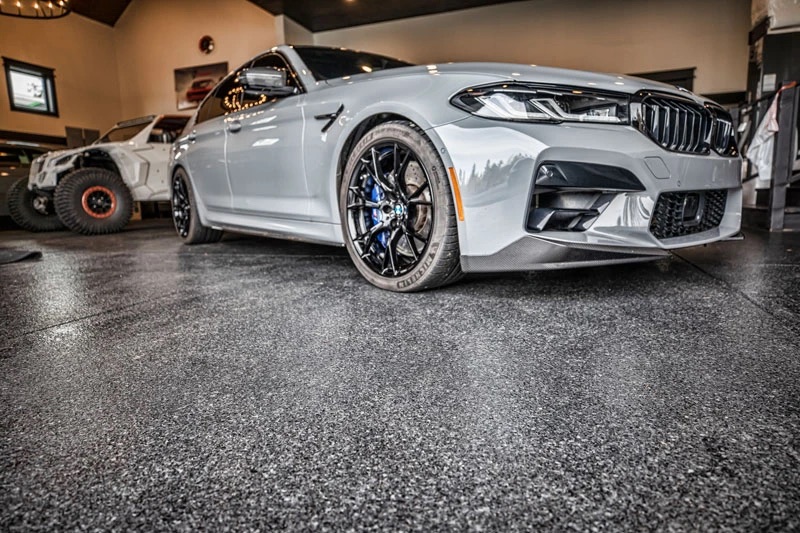
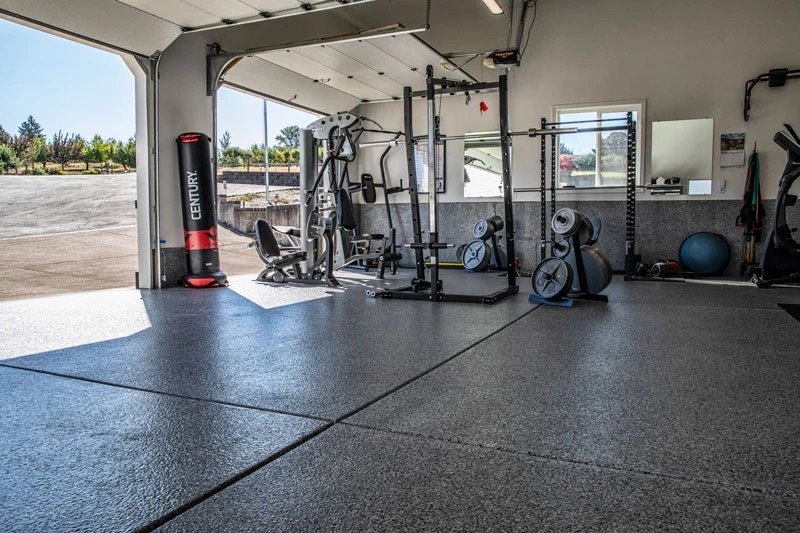
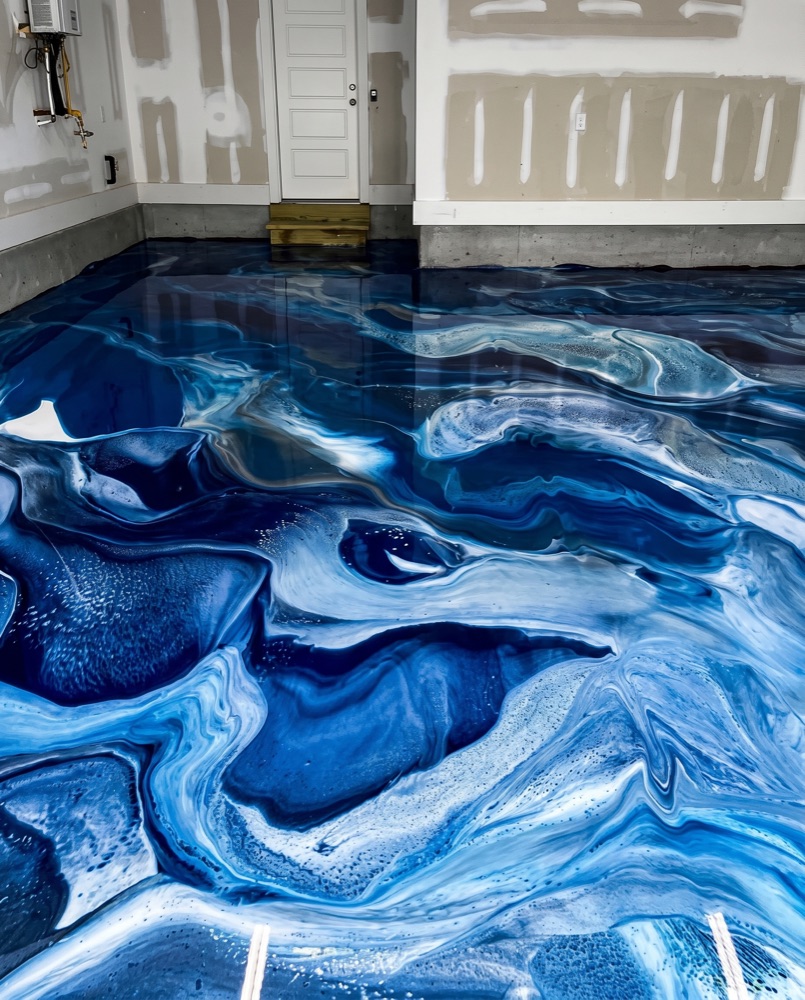
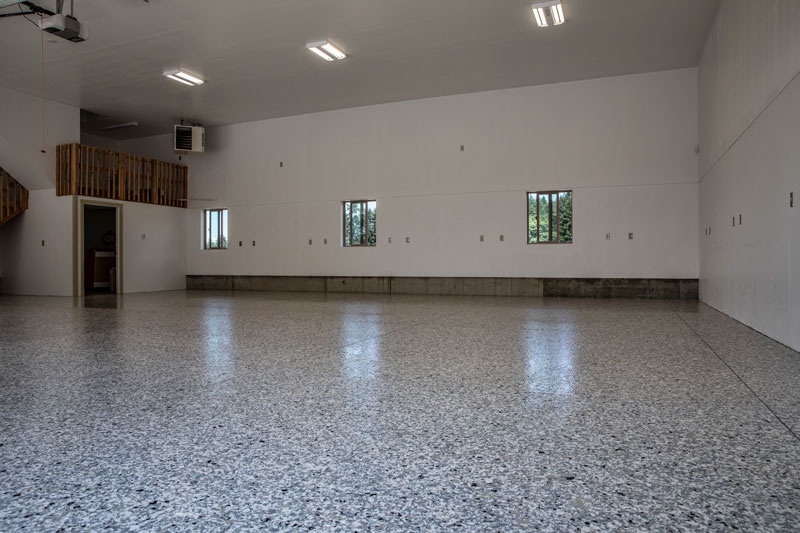
Flake floors broadcast decorative vinyl chips into the base coat for a speckled, textured, forgiving finish — the most popular garage choice. Solid-color floors are a smooth, single-color system common in shops and commercial spaces. Metallic floors use pigmented resins that flow into a marbled, three-dimensional look for showrooms and statement spaces.
Is a coated floor slippery when wet?
Full-flake floors have a natural light texture and are comparable to sealed concrete when wet. For pool decks, wash bays, entries and commercial floors we add an anti-slip aggregate to the topcoat to meet the traction the space needs.
Do you need to move everything out of the garage?
Yes — the floor needs to be completely clear for grinding and coating, including shelving, freezers and anything on the slab. Most homeowners stage things in the driveway for the day; we're usually done by evening and you can move everything back in 24 hours.
Can you coat a floor in winter or in rainy weather?
Polyaspartic systems cure at temperatures that stall epoxy, so we install year-round. Heavy rain matters mainly for open slabs and pool decks; garages and interior floors are unaffected.
How do I clean and maintain a coated floor?
Sweep or blow it out, and mop or hose it with water and a mild cleaner. No waxing, no sealing, no special products. Avoid dragging sharp steel across it, and wipe up battery acid or brake fluid promptly like you would on any surface.
Do you offer commercial and industrial floor coatings?
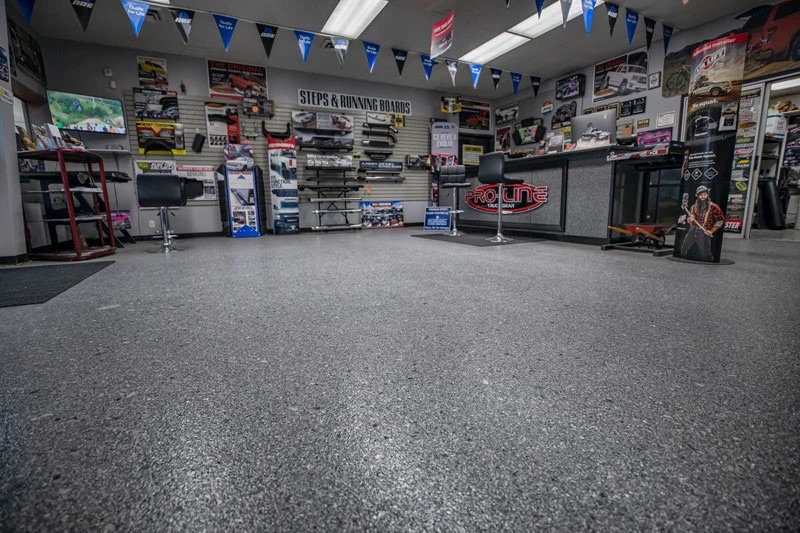
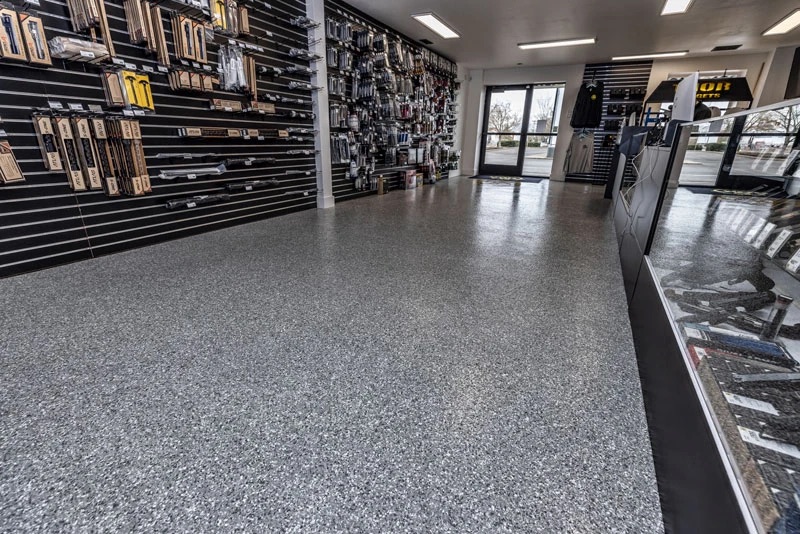
Yes — shops, warehouses, showrooms, kitchens and service bays. Commercial floors get systems specced to the actual traffic and chemicals, slip-rated where needed, installed with fast-cure products and scheduled around your operation, including nights and weekends.
How thick is a professional floor coating?
A residential flake system typically finishes around 20–30 mils; commercial builds go thicker. A box-store kit is 2–4 mils — a tenth of the thickness, which is why it wears through and peels.
Do you provide a written quote?
Always. Every quote lists the prep, repair, system layers and price in writing before any work starts, and the number doesn't change on install day unless you change the scope.